“As the Interim Vice Chancellor of the Institute of Agriculture and Natural Resources, I want to thank you for your efforts in co-creating with Nebraska communities, connecting them with the resources, research, and innovation of the University of Nebraska-Lincoln. As the flagship land-grant institution in Nebraska, it is our pleasure and our responsibility to contribute to Nebraska’s public good through our research and discovery, Extension and engagement, teaching and learning, and our volunteerism. Thank you for all you do to move this work forward..”
— Tiffany Heng-Moss, Interim Vice Chancellor of the Institute of Agriculture and Natural Resources
Engagement by the Numbers
Progress to Date
- Engagement Collaborative launched the Community Resources Database, a repository of all community resources from UNL (N|2025 Aim 4; Expectations 6, 7, and 8)
- UNL Engagement and Outreach Map highlights over 4,500 statewide engagement projects in teaching, research, and Extension (N|2025 Aim 4; Expectations 3, 6 and 7)
- Launch of the Engagement Newsletter, highlighting engagement events, projects, and resources for faculty and staff (N|2025 Aim 4; Expectations 6, 7, and 8)
- Monthly webinar series, Engaging Communities, Expanding Impact (N|2025 Aim 4; Expectation 7)
- Community-UNL Virtual Open Houses happen twice a year for community members to connect to faculty who are looking for partners for student service learning and research projects (N|2025 Aim 4; Expectations 5, 6, and 7)
- Community-Engaged Faculty and Staff Lunches happen monthly on City and East campuses to build faculty and staff networks (N|2025 Aim 4; Expectation 7)
Next Steps
- Developing metrics for reporting and evaluation of engagement work and awards for those doing exceptional community engagement work. (N|2025 Aim 4; Expectation 7)
Engagement Continuum
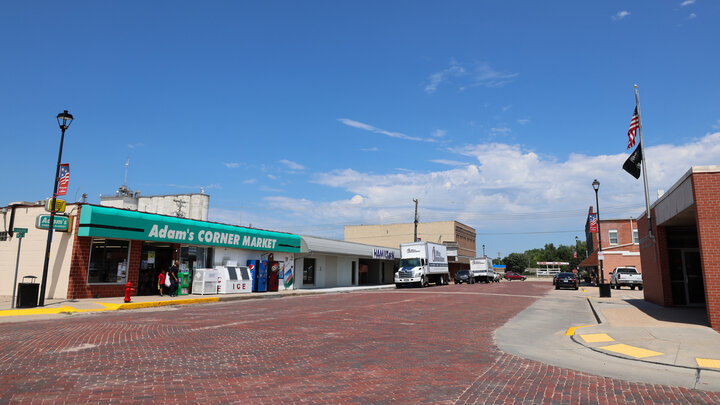
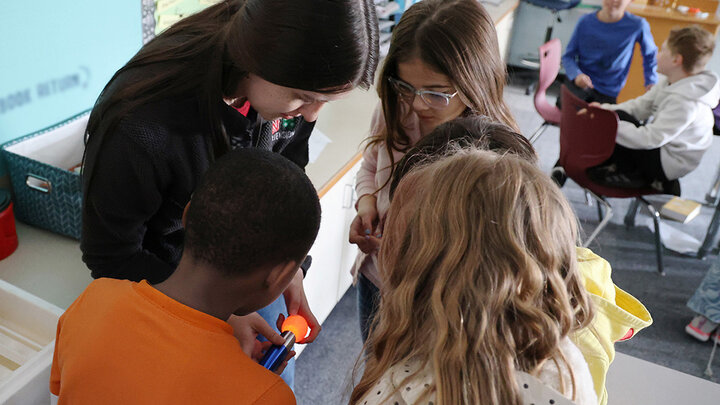
Engagement exists on a continuum, and we are building supports to help more of our community engagement projects to be in communities and with community members. Co-creation and shared leadership and learning are what we are striving to accomplish more often.
To:
Projects informing the community by providing balanced and objective information to assist them in understanding the problem, alternatives, and solutions.
For:
Projects involving the community throughout the process to ensure their concerns and aspirations are consistently understood.
In:
Projects partnering with community stakeholders in each aspect of the decision-making from development to solution.
With:
Project with shared leadership of community-led projects with final decision-making at the community level.
Language adapted from the IAP2 Public Participation Spectrum